Phuket Real Estate
Market Insight
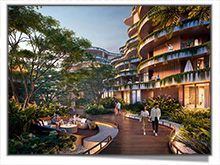
The Bang Tao, Laguna, and Layan areas represent a significant portion of Phuket’s residential market value, establishing this region as the hub for the province's high-end housing sector. Amidst this landscape, Layan Verde distinguishes itself through hotel-style services and a distinct Thai identity.
Vadym Bukhkalov, founder of VillaCarte Group, revealed that Layan Verde has progressively cultivated a clear Thai identity. This evolution stems from the people, partners, and strategic decisions involved in the project's design—ranging from construction methods to architectural concepts that respect the local terrain and character. This philosophy extends to the service experience being developed in collaboration with Dusit International, as well as the selection of materials, furniture, and craftsmanship from Thai manufacturers.
Collectively, Bang Tao, Laguna, and Layan account for a substantial share of Phuket’s upcoming residential projects. Specifically, Bang Tao represents 62% of the units scheduled for completion in the second half of 2026 and 71% of those slated for completion in 2027.
These figures become even more compelling when focusing on the high-end market segment. Bang Tao accounts for 52.3% of residential units currently on the market across Phuket, yet represents 64.2% of the total market value—reflecting a high concentration of high-value properties in the area. Layan Verde operates within this segment, offering premium and luxury residential projects.
Of the 60 premium projects surveyed across Phuket, 31 are located in Bang Tao, with an additional 8 in Layan. Furthermore, Bang Tao is home to 58.6% of all "Lux" and "Lux+" units currently available on the island. With such a high concentration of high-value projects in Bang Tao, differentiation has become both more challenging and increasingly important.
Competition at a New Level
Real estate consultancy Knight Frank identifies Phuket as a lifestyle destination that attracts significant interest from foreign homebuyers. Their research indicates that demand for high-quality housing in Phuket remains robust. At the same time, buyers have heightened expectations regarding hotel-style services, health and wellness, convenience, privacy, prime location and atmosphere, as well as unique elements that are difficult for other projects to replicate.
Mr. Vadim stated, "During the PropertyGuru evaluation, the judging panel took a special interest in our partnership with Dusit International." “This likely reflects the current trend of growth in hotel-branded residential projects. Dusit is truly an integral part of Layan Verde, though I do not believe this recognition stems from that single factor alone.”
“We aim to continuously build upon this identity and are currently exploring further collaborations with leading Thai brands. Perhaps this is why Layan Verde has successfully developed a distinct identity of its own, without needing to force differentiation.”
Dusit International will manage more than half of Layan Verde’s 774 units, as well as one of the project’s two five-star hotels. Meanwhile, the architectural design by Dewan Architects + Engineers—led by Mohammed Adib—harmonizes with the site’s natural topography through tiered building forms and vertical greenery on the facades, ensuring both privacy and scenic views.
Approximately 40% of the project area is dedicated to infrastructure, communal spaces, and landscaping. The landscape design, created by the Bangkok-based firm SHMA, incorporates over 300 plant species and more than 10 waterfalls, while the project plans to offer over 65 distinct amenities.
A living experience that extends beyond the residential units.
The project also extends its support to the surrounding community; Layan Verde constructed a new rainwater harvesting system—designed to handle volumes exceeding the calculated peak drainage requirements—and subsequently handed the system over to the Phuket municipality. Currently, this system also supports the areas of neighboring projects. Furthermore, VillaCarte Group is involved in developing the access road to Layan Beach as well as pedestrian walkways.
Layan Verde is being developed to meet EDGE standards; preliminary calculations indicate that the project can achieve energy savings of approximately 38%, a 30% reduction in water consumption, and a 34% reduction in embodied carbon from materials and construction processes compared to EDGE benchmarks.
This year's recognition marks another milestone following a series of awards and accolades within the real estate sector. VillaCarte Group received the PropertyGuru Breakthrough Developer Award in 2024, while Layan Verde earned architectural recognition from AADA and secured two additional awards from PropertyGuru in 2026
Go To Lead
|